
Launching Stanford’s First-Ever EWB Chapter
By Caroline Adkins
November 18, 2025
Engineers Without Borders was an absolutely pivotal part of my college experience. It reshaped the way I approach science and engineering and deeply influenced how I see the world and my role in it. So, when I arrived at Stanford for grad school in 2022, I was surprised to learn that there wasn’t an active EWB chapter on campus. I asked around and kept hearing the same story: several students had tried to establish one in the past, but each attempt had stalled for one reason or another. I was disappointed, but as a first-year PhD student juggling new research and coursework, the idea quietly slipped to the back of my mind.
It resurfaced toward the end of my second year, just after I had finished my General Qualifying Exam and finally had space to breathe and reflect on my time here. I loved the research I was doing – we were actively pushing the frontiers of modern water treatment technologies – but I couldn’t shake the feeling that something was missing. I knew from experience that while cutting-edge innovation is essential, many of the world’s water challenges can be addressed with tools and knowledge we already have. After all, my undergraduate EWB chapter was able to bring clean water to hundreds of people in the Dominican Republic with a swimming pool chlorinator and some PVC pipe.
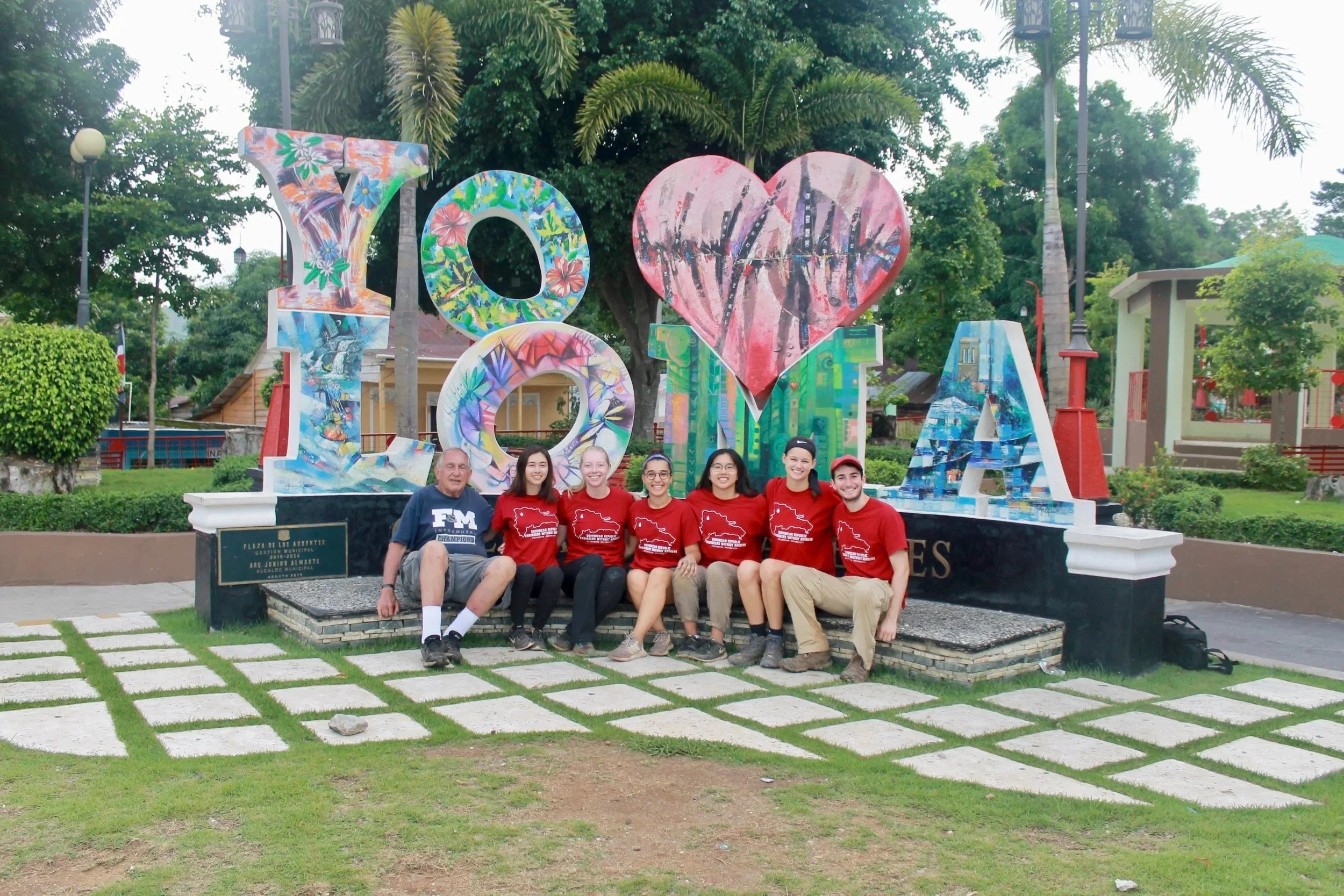
EWB-USA Princeton University Chapter’s Dominican Republic Team (2019)
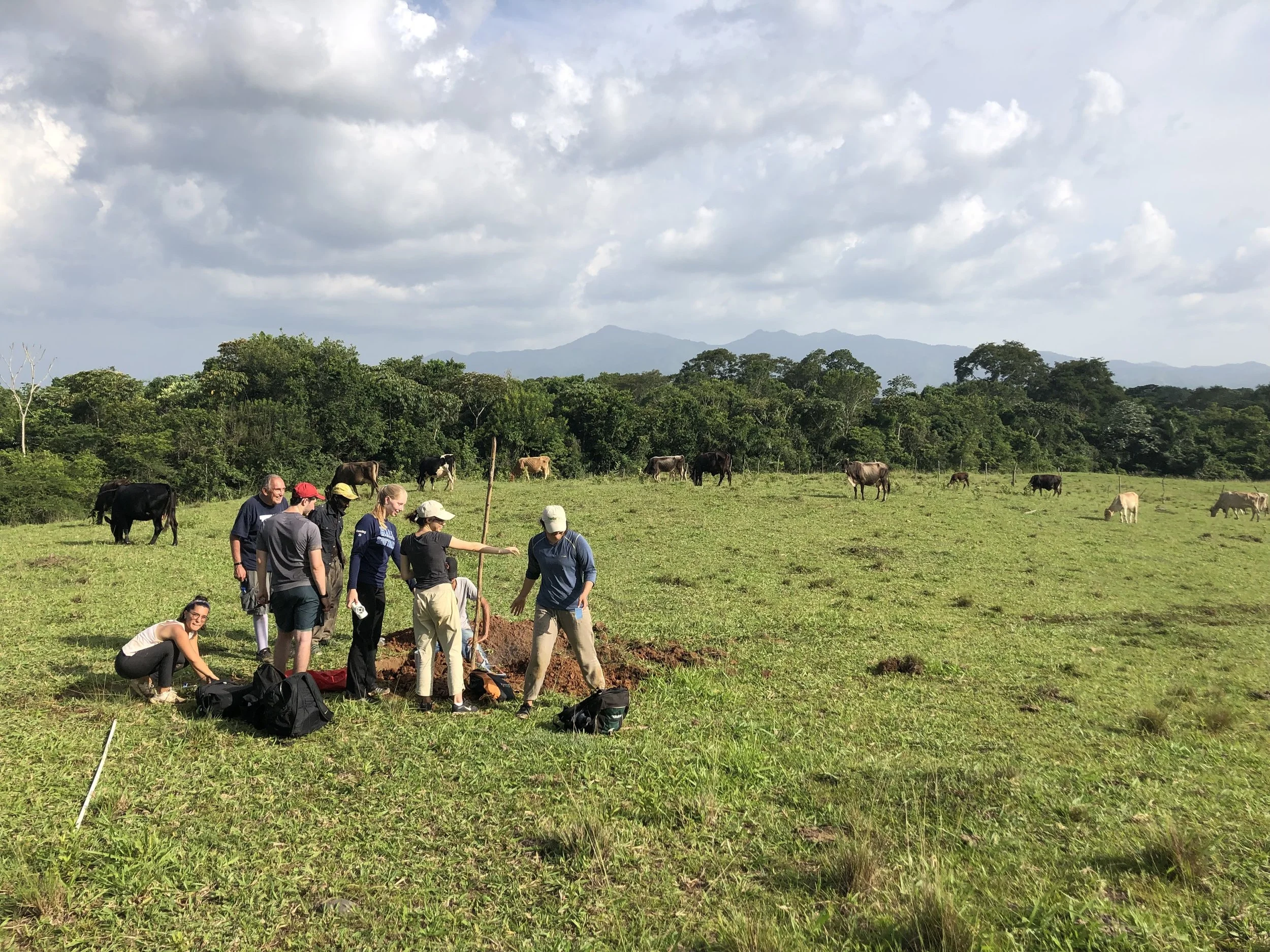
My teammates fixing a distribution line leak in a local cattle farmer’s pasture
At first, I started looking into joining the San Francisco Professional Chapter of EWB, thinking it might offer the kind of hands-on, community-centered work I’d been missing. But the more I thought about it, the more it became clear: by starting a new EWB chapter at Stanford, I wouldn’t just be creating an opportunity for myself, I’d be opening the door for thousands of students across the university to engage in this transformative work as well.
The first step in all of this was to gauge demand. I needed to see if anyone else at Stanford would actually be interested in EWB, so I sent out a simple interest form. Now, grad students are not exactly known for being the most well-connected people on campus, so I’m guessing this interest form did not travel very far beyond the other graduate students in my department. But even within that tiny slice of a massive university, the response was overwhelming. People were genuinely excited about the idea – proof that I wasn’t the only one feeling the absence of something like EWB at Stanford.
As the responses rolled in, I also started identifying a handful of students who had been involved with EWB during their undergrad years and were eager to help rebuild a chapter here. That’s when I connected more directly with my co-founders, Lilliana Brandao and Jonas LaPier, who would later become our VP and Fundraising Chair.
Together, Jonas, Lilliana, and I embarked on the arduous journey of officially establishing the chapter. What followed was months of administrative ping-pong – securing approval from both EWB-USA and Stanford, finalizing contracts, submitting documentation, and tracking down the right offices and administrators to champion our cause. It certainly wasn’t a smooth process, and I started to understand why previous attempts had failed. But with persistence (and a lot of follow-up emails), we slowly gathered the support we needed. Eventually, we got all the right people on board, our application was approved, and EWB Stanford finally became a reality.
Since then, everything we’ve done has been focused on building strong foundations for the chapter. We began by assembling a “Founders Board” of graduate students with previous EWB experience, bringing everyone together to reflect on what had worked at their former chapters, what hadn’t, and what we wanted to do differently this time around. Those conversations shaped many of our early decisions: our leadership structure, our bylaws, our operational policies, and all the foundational pieces that would become the backbone of EWB Stanford. As our vision for the chapter started to solidify, we transitioned the Founders Board into our first official Executive Board and welcomed an amazing group of undergraduates who brought fresh energy and new ideas. We then started hosting info sessions and open houses to spread the word, built momentum across campus, and even applied for our chapter’s first international project in Ecuador. And finally, this fall quarter, we held our very first chapter meetings – something that had always felt like a distant milestone suddenly becoming real.
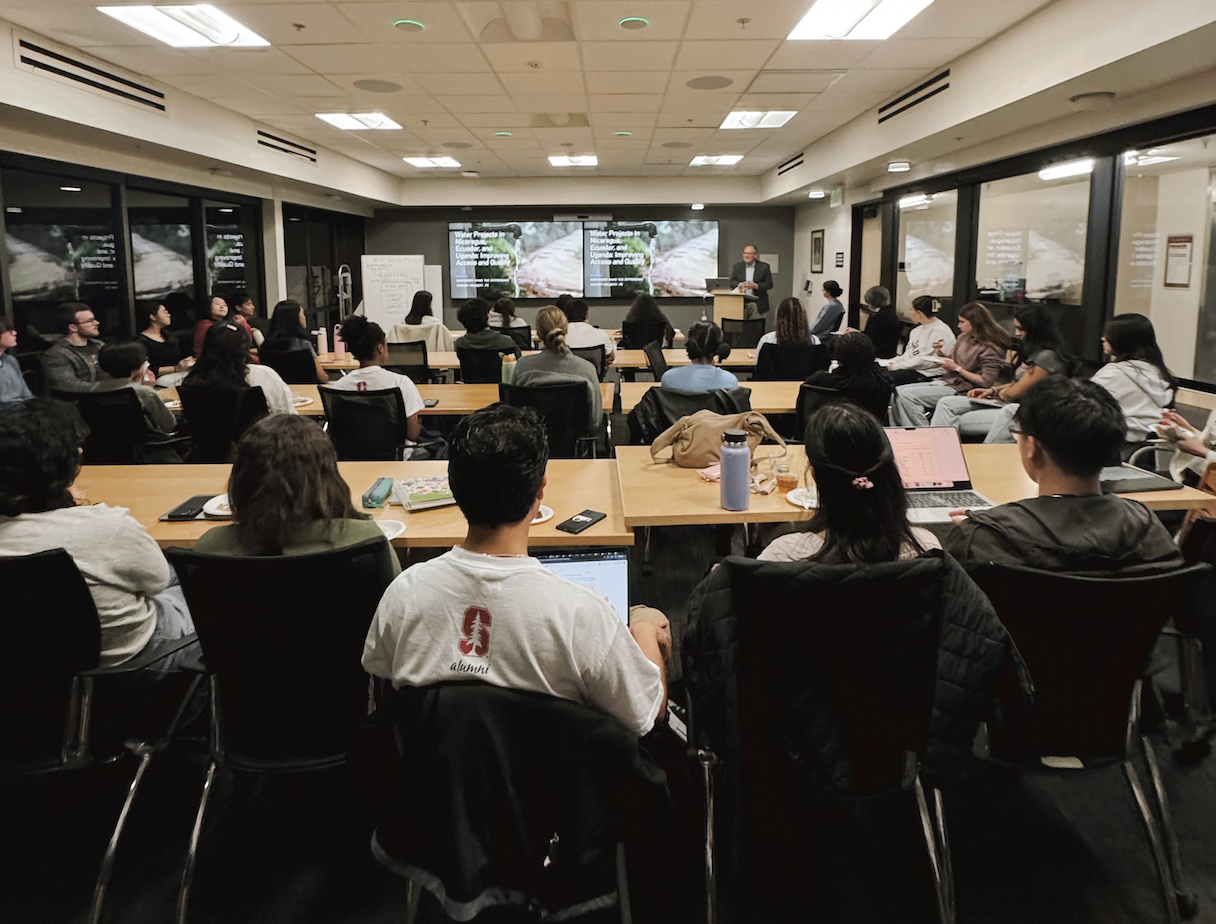
One of our most recent meetings with our first guest speaker!
As I prepare to step down as Chapter President at the end of this year and officially pass the torch to the next generation of EWB Stanford leaders, I can’t help but reflect on what this entire process has meant to me and how much it has taught me. There are countless lessons I’ve learned over the past few years, but a few stand out:
If an opportunity doesn’t exist, create it for yourself. This is the lesson that ultimately drove me to start the chapter, but it’s also the reason we were able to succeed. Every time we were told no, we found another way. When the first two options didn’t work, we made a third. Persistence and creativity made all the difference.
People are everything. I could not have done any of this without the incredible team by my side and the incredible support we received from both the university and EWB-USA. I am especially grateful to my co-founders, Lilliana and Jonas, our Founders and Executive Boards, the Civil and Environmental Engineering Department (specifically Sarah Billington and Ryan Johnson), and our wonderful mentors, Bill and Azalea Mitch. Each of them made all of this possible, and I will be forever grateful for all of their hard work and dedication.
Measure twice, cut once. I know this phrase is technically about cutting wood, but it has been a guiding principle for me since we first started setting up the chapter. To most students on campus, EWB Stanford is a brand-new organization just beginning to operate this fall. Behind the scenes, though, we’ve been working for over two years to bring it all together. At times, the slow pace was frustrating – especially for those of us in the thick of it – but it allowed us to be deliberate and intentional in building a chapter that will not only thrive today but endure for decades. We sought feedback from as many people as possible, both with and without EWB experience, and carefully thought through every decision. We also built in mechanisms for change, knowing we wouldn’t get everything perfect on the first try. Sure, it made some board meetings long and tedious, but in the long run, it will be worth it to leave behind a strong, healthy EWB chapter that continues to grow long after we’ve graduated.
Building EWB Stanford from the ground up has been one of the most challenging and rewarding experiences of my life. Seeing the chapter come to life – from a simple idea to a thriving community of over 50 students passionate about applying engineering for social impact – has been incredibly fulfilling. As we pass the torch to the next generation of leaders, I am excited to watch them take this chapter even further, continuing to learn, grow, and make a difference in communities around the world. For anyone reading this: if there’s something missing in your own community, don’t wait—create it. You never know who you might inspire along the way.