Not an Engineer? No Problem.
By Lilliana Brandão
January 12, 2026
I first learned about EWB-USA when I was applying to colleges, and I immediately knew that the work was something I wanted to be a part of. I joined the Harvard student chapter with no experience in engineering or humanitarian development. Despite studying chemistry instead of engineering, I could still fully participate in EWB because so much of the work we did as a project team was learned along the way, and there were professional engineers to guide us and provide critical feedback. By my junior year, I was one of the project managers for our chapter’s water access project in Kibuon, Kenya.
This was during the pandemic, which made implementing a well challenging. Multiple trips to the community were cancelled, and we ended up having to do a remote implementation to drill the borehole well. Even though we were not there to see our plans come together and more actively participate, it was exciting to know that the community’s first well had been drilled and that the people of Kibuon had better access to drinking water. It has also been exciting to see the progress that has been made on this project after I graduated. The chapter’s work has expanded to include additional wells, storage tanks, and solar pumps to make water even more accessible.
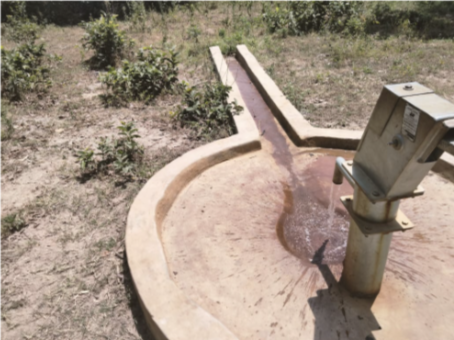
One of the first borehole wells in Kibuon
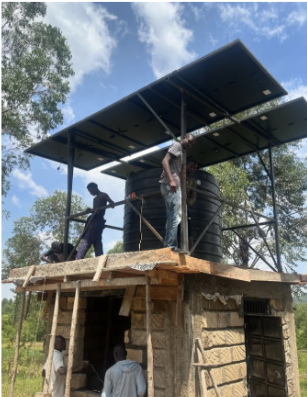
A solar-powered water kiosk in Kibuon
After college, I applied for jobs and graduate school. In my essays and interviews, I frequently talked about my experiences in EWB. The problem-solving skills and community-driven approach that I practiced in EWB proved helpful in different positions across sectors, even though I was applying to non-engineering jobs.
I started working towards my PhD in chemistry at Stanford in 2023, and I was disappointed to find that there was no EWB chapter here. When I saw that other grad students were working to start a chapter, I had to be involved. It has been so exciting to see the chapter get up and running as we start our first project in Peltetec, Ecuador.
In a student chapter of EWB-USA, I think what matters more than having an engineering background is having a willingness to learn and work collaboratively while also having a passion for making sure people around the world have access to basic human needs. So much of the work that we do is non-technical, from fundraising to developing community surveys, and communicating with our in-country partners, so there really is a role for anyone who is interested to get involved. Regardless of your background, experience, or field of study, there is a place for you in our chapter if you are excited about making sure that all people have access to the infrastructure they need to live safe and healthy lives.
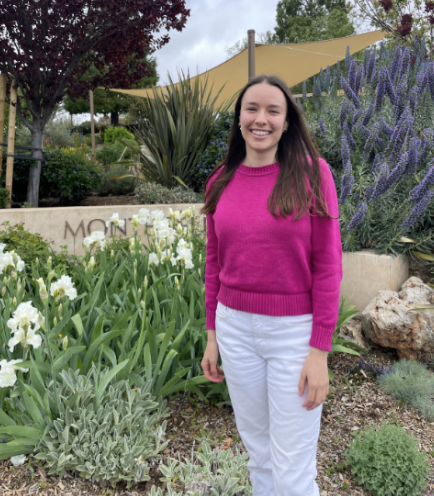
Me!