
Heading Back to Quito
By Srinath Hariharan
September 8, 2026
While our previous days began bright and early at 7 AM with breakfast, today was a little different—we weren’t going into Peltetec today, so we took the opportunity to sleep in.
Breakfast at 8 AM was highlighted by arepas and scrambled eggs.
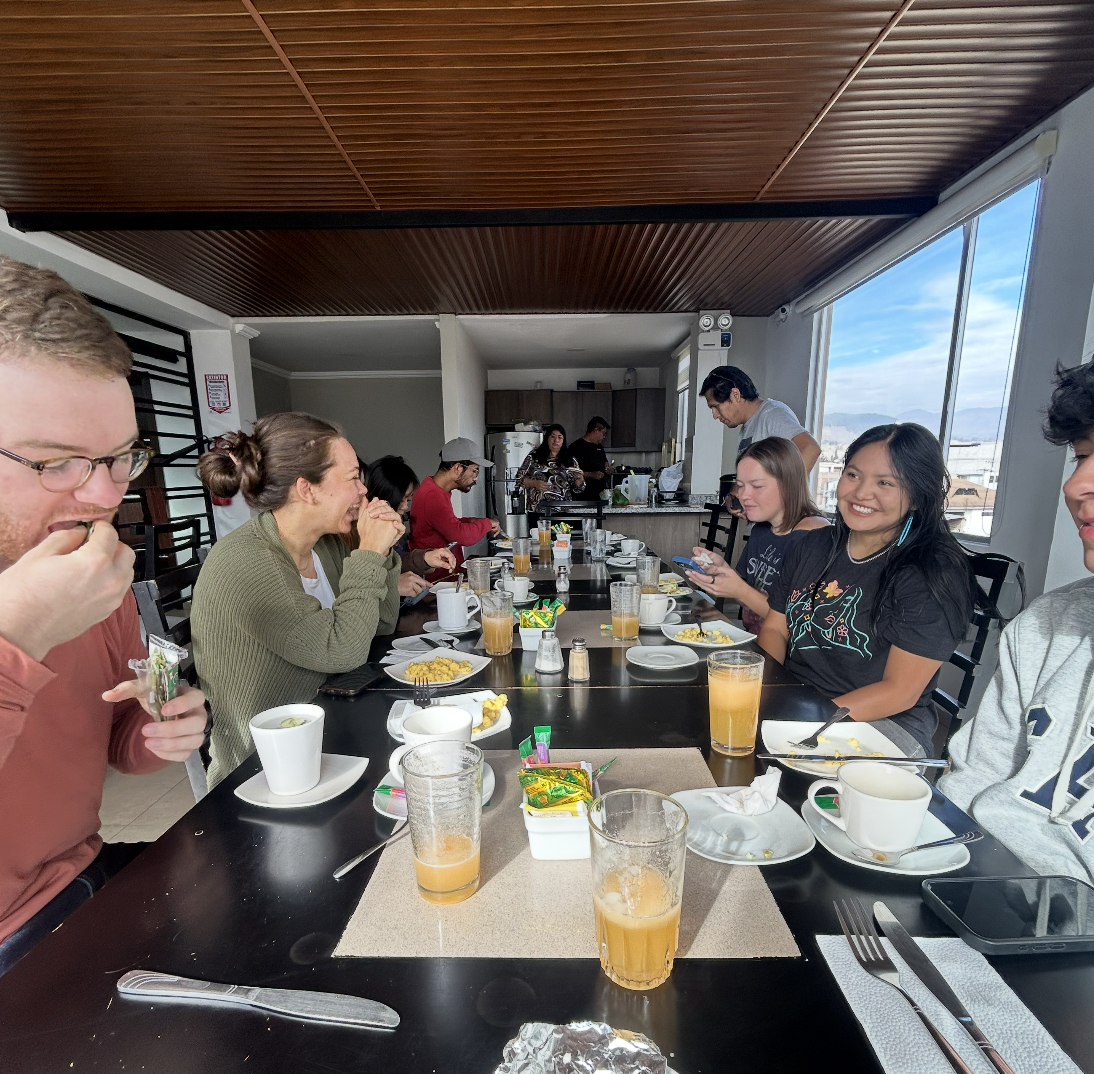
Wilson, Camila, Emily, and Elena all tried some coca tea (courtesy of coca leaves that were obtained at a shop near the Teleférico). We left the hotel at around 9 AM for a quick tour of Riobamba before saying goodbye to the city.
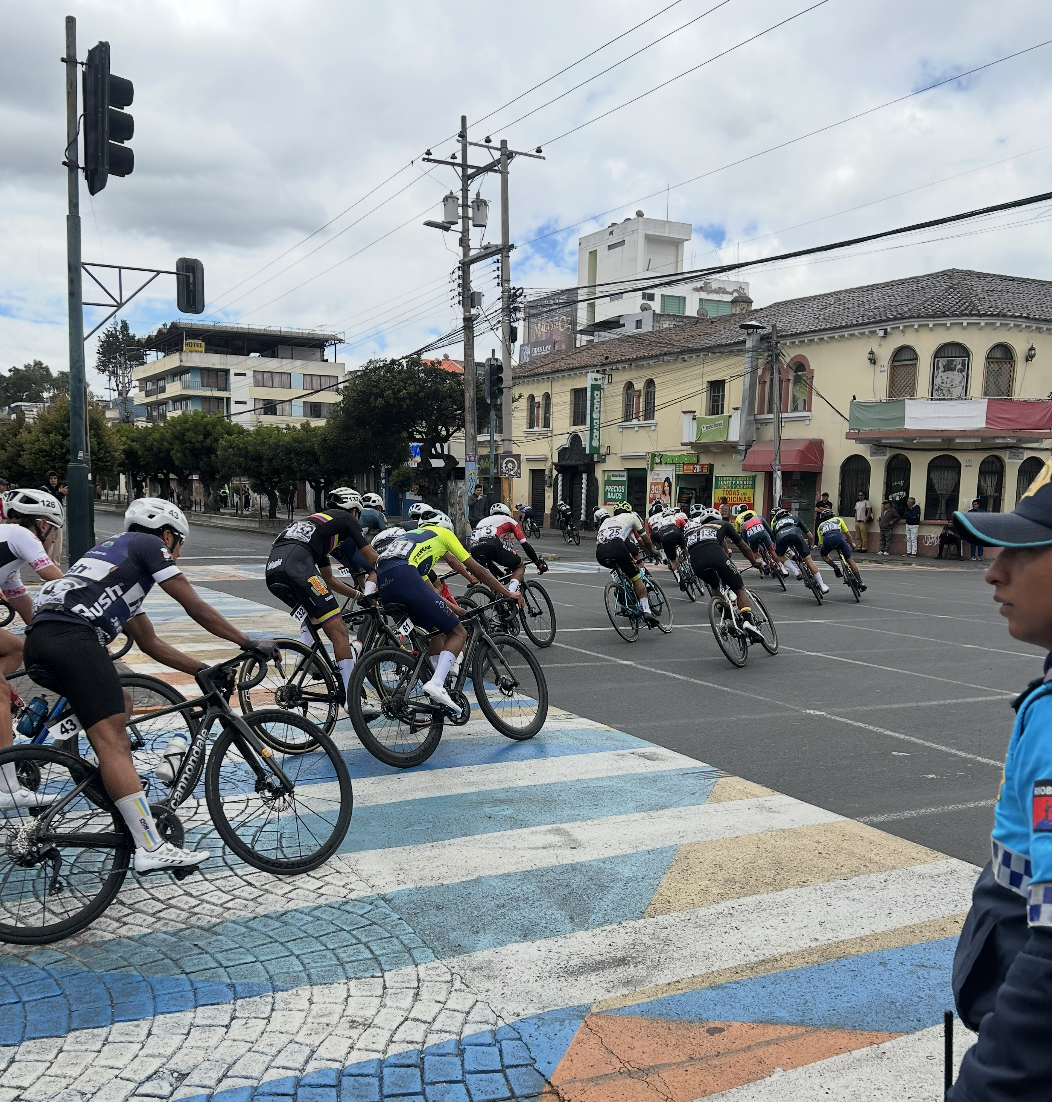
We had to stop the car short of the city center due to the Vuelta Ciclismo al Ecuador 2026 taking place in Riobamba. After walking a kilometer, we witnessed the cyclists negotiating sharp turns at high velocity (seemingly what many bicyclists on Stanford’s campus unsuccessfully try to emulate), followed by a caravan of vehicles traveling at speeds ostensibly unsafe for the narrow streets of the city.
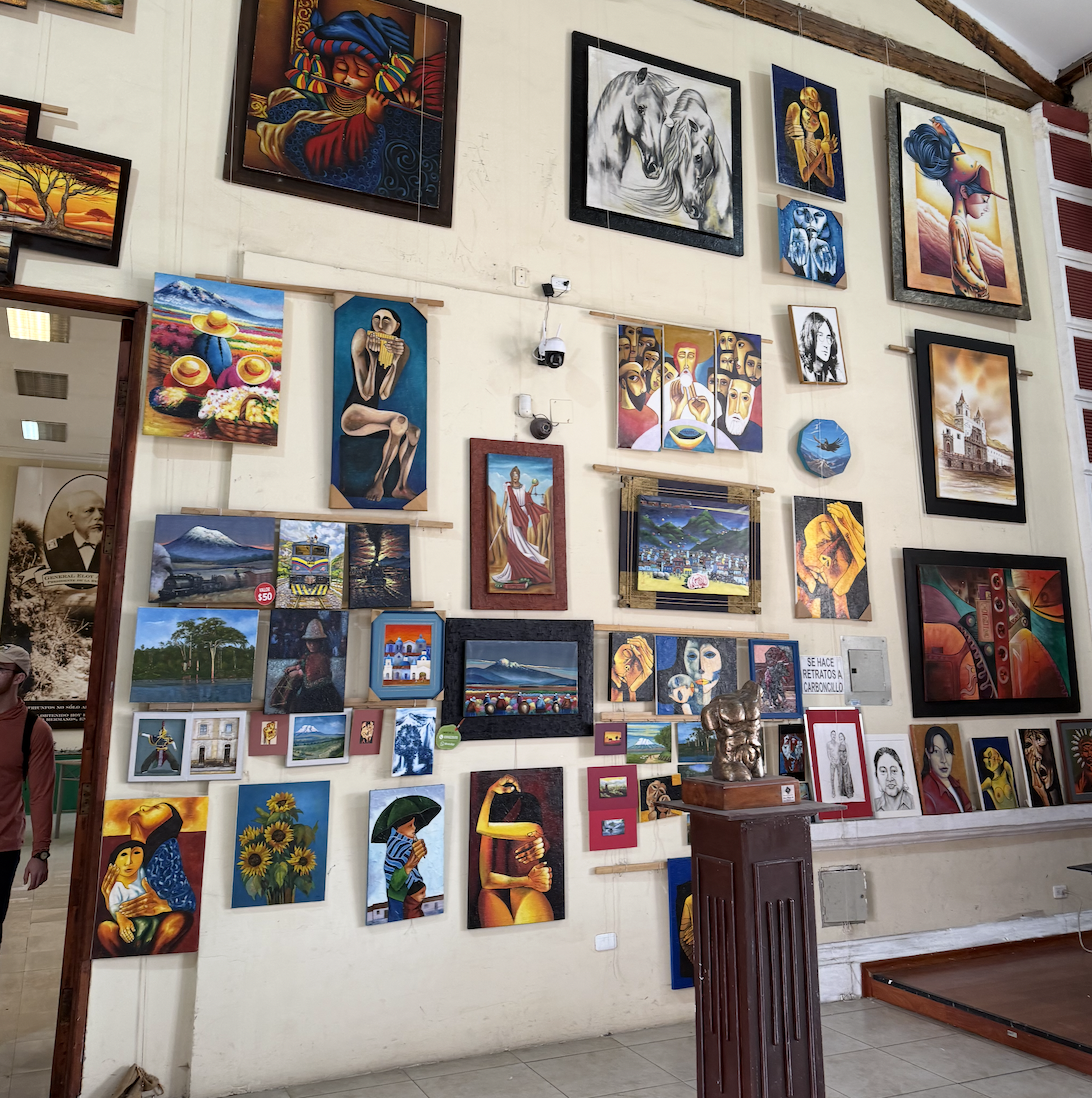
Afterwards, we walked around a chain of small artisan stores selling souvenirs, jewelry, scarves, and more. It was here that the crippling decision paralysis of multiple members of the team (primarily myself) was exposed.
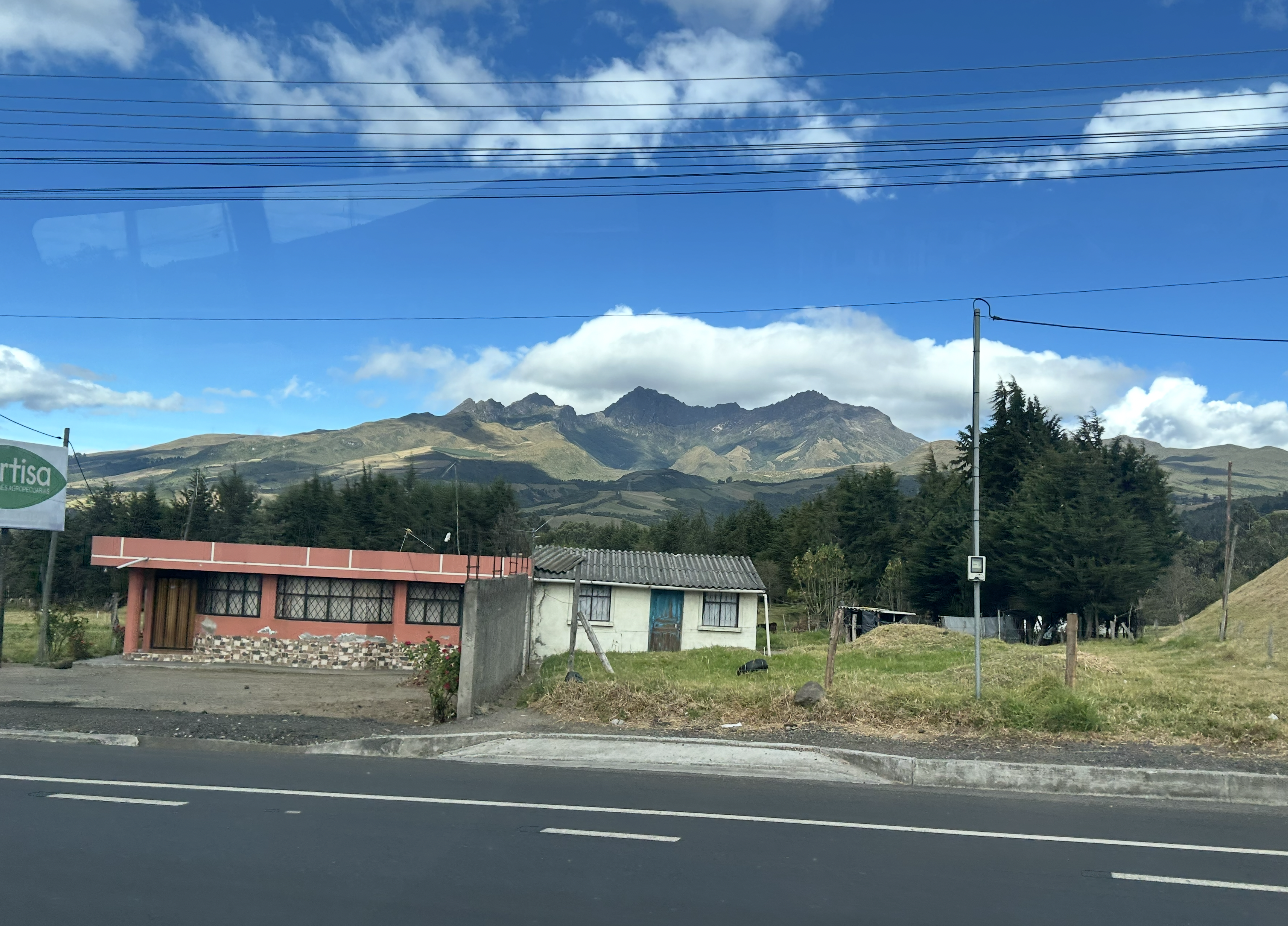
After a delicious final lunch made by the wonderful staff of our hotel in Riobamba, we started to make our way back to Quito. The long road trip was made exciting by a selection of music curated by Pablo, our Program Manager from FIEA (our partner NGO) who had accompanied us throughout our trip. Diego watched Ted Lasso, Emily caught up on some much-needed sleep after many late nights, and Wilson worked on his blog post (which is going up tomorrow—stay tuned). I listened to music, which, set against the backdrop of the mountainous landscape of Ecuador, was at once both calming and moving.
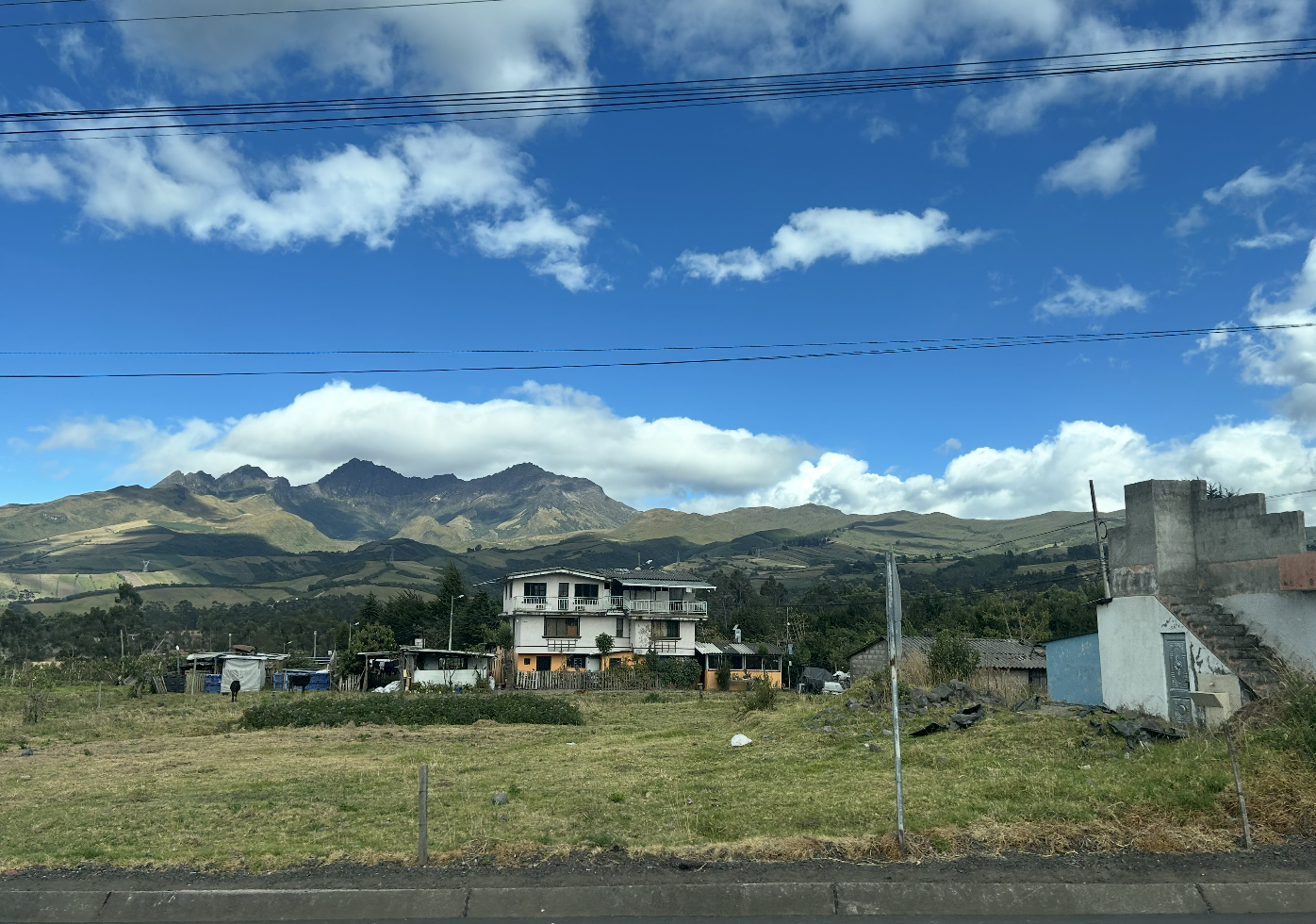
I found myself reflecting on our assessment trip coming to an end. Emily and I (co-project leads), along with the entire team, had spent months making plans for the trip and filling out documentation relating to what activities we would be completing on the ground. However, I had underestimated just how much of our learning would be obtained experientially, through actually conducting technical and community surveys on the ground. Through participating in community surveys, we learned the value of intentionality in the phrasing of questions to community members, and through conducting technical tests, we learned about optimal techniques for obtaining many integral water parameters.
As the city of Quito slowly appeared on the horizon, indicating our road trip was coming to end, I was filled with a sense of deep gratitude. The work ethic, passion, and candor of this team made this an experience I will truly never forget; and while Emily and I sometimes (or more like almost always) joke at each other’s expense, her thoroughness, intelligence, and kindness have made her an incredible project co-lead and someone I have loved working alongside in Ecuador.
Of course, in addition to our project team in Ecuador, even though she did not physically travel with us, Caroline’s involvement and leadership were an integral part of ensuring that we were adequately prepared for the trip, and her meticulousness and dedication in setting up this chapter—which formed the foundation for all of our project activities—have always been motivational.
This trip would not have been possible without Wilson and Camila, our amazing project mentors. Throughout the trip, Wilson, Emily, and I would occupy the back row of the van, and our conversations would range an incredible variety of topics. However, regardless of the topic being discussed or the question posed by Emily or me, Wilson would almost always have well-articulated thoughts to share—a testament to his inspiring commitment to the pursuit of knowledge across disciplines. Wilson was always eager to teach us in the field and give us advice, and regretfully, I have to admit that Wilson did indeed successfully aura farm on at least a few occasions, despite his best efforts.
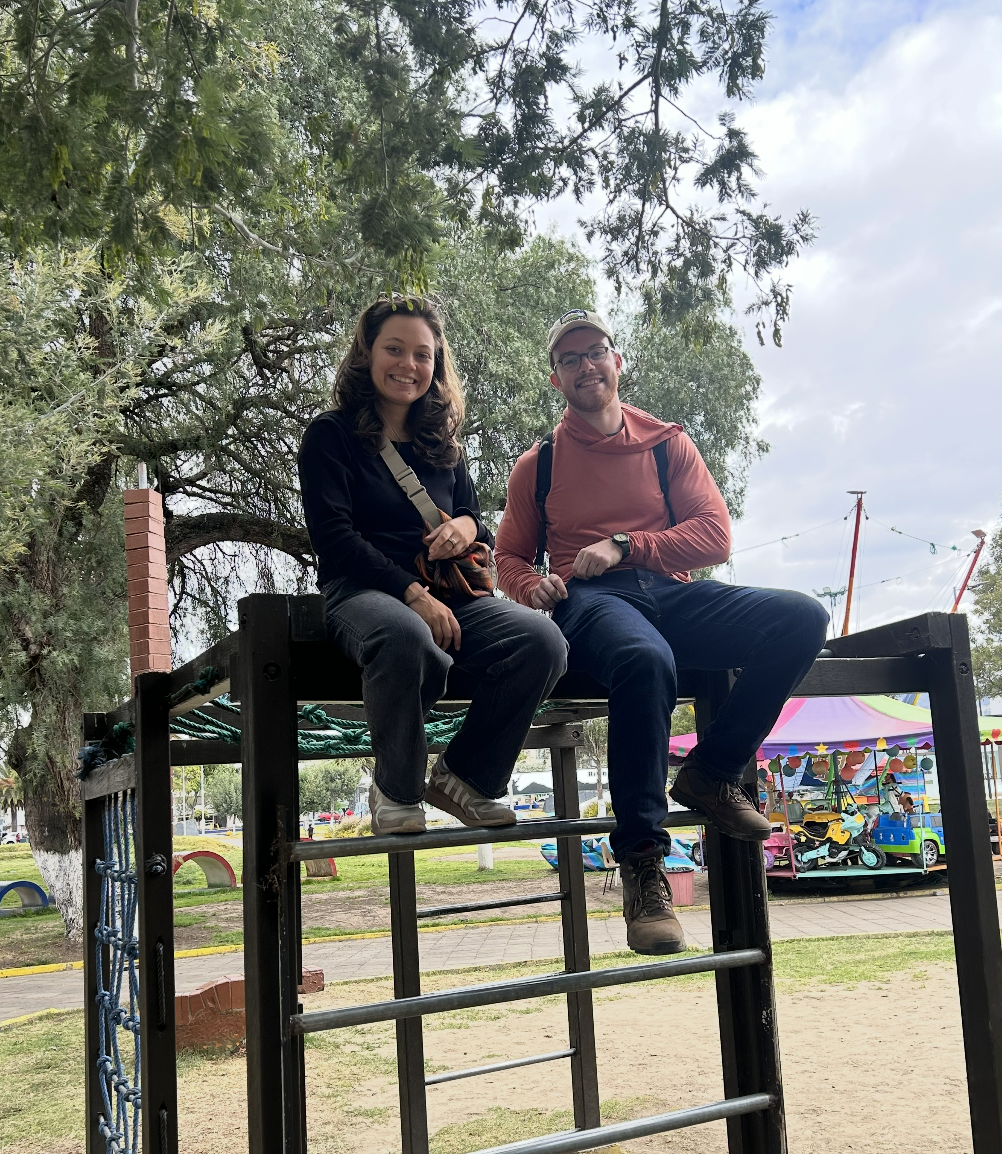
Camila helped lead our team through community surveys. It was incredibly motivating to see the warmth, dedication, and intentionality with which she communicated with community members while conducting surveys—it was obvious how much she valued creating genuine connections with both community members and our team. Our evenings after coming back from the community would often consist of Camila, along with a few of us, counting coliform colonies on Petrifilm. These sessions were usually filled with engaging conversations and laughter, which made even the most tedious tasks enjoyable.
And finally, the residents of the Peltetec community, who welcomed us with open arms. Our days in community would begin with a few community members shaking each of our hands and greeting us. All of our hikes were accompanied by many locals, whom were all eager to help us carry our heavy water testing equipment. Even though we would frequently require many more breaks and would struggle to keep pace with them, they were always eager to lend a hand to help us traverse seemingly impossible portions of the trails to the catchments.
The day ended in perhaps the most fitting way possible—the entire team sitting around a table, eating our delicious dinner cooked by the hotel staff while trading jokes and playful insults. Wilson boldly claimed that he could take on 100 pelicans with his bare arms, to which the rest of us (rightfully) scoffed. A passionate discussion of Christopher Nolan’s best movies ensued, and we ended off the night by sharing some hilarious photos taken during the trip. The other residents of the hotel surely would have heard the raucous cacophony of laughter from the dining room and wondered what was afoot.
While our assessment trip is coming to an end, I am deeply grateful for the people, activities, and community that made this trip truly unforgettable, and I am excited about the foundation we have set for further project activities.
Srinath